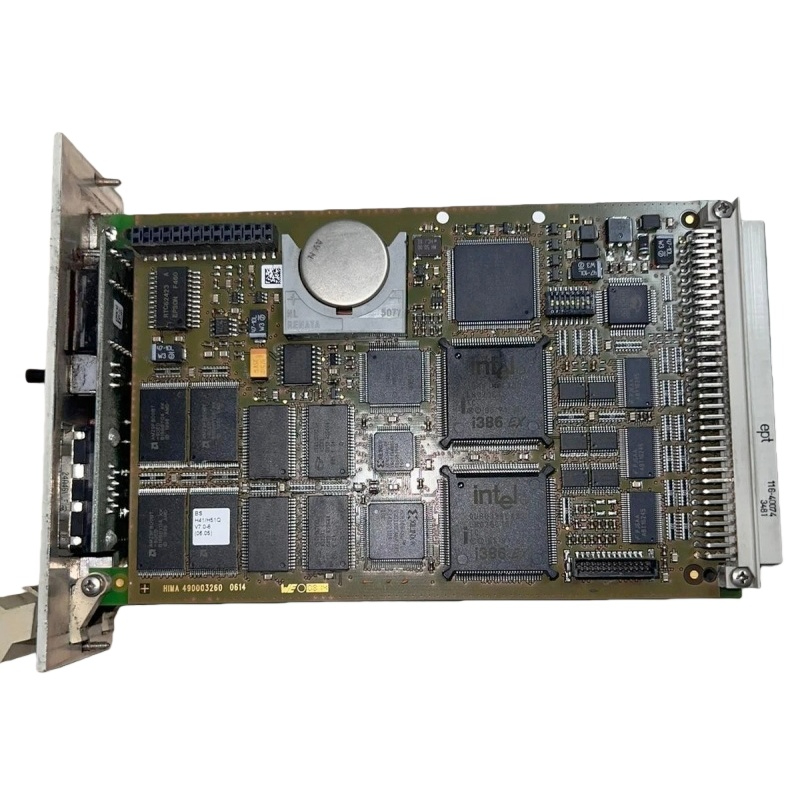

Specifying a HIMA F8650X for your Safety Instrumented System (SIS) is a decisive step toward risk reduction. However, the superior safety performance of the hardware is only realized through meticulous engineering, rigorous validation, and disciplined operation. This guide outlines a structured, phase-gated approach to implementing an F8650X-based SIS, moving from conceptual design to sustained operation, ensuring the system delivers its intended safety integrity.
Phase 1: Safety Lifecycle Planning and Specification
Before a single module is ordered, the foundational work determines the project's success. This phase aligns with the early stages of the IEC 61511 safety lifecycle.
-
Hazard and Risk Analysis (HIRA): A multidisciplinary team identifies potential hazardous events for the process. For each hazard, the team determines the required risk reduction. This quantifies the performance requirement for the SIS.
-
Allocation of Safety Functions and SIL Determination: The necessary risk reduction is allocated to specific Safety Instrumented Functions (SIFs). Each SIF is assigned a target Safety Integrity Level (SIL 1, 2, or 3) based on the amount of risk reduction it must provide. This document, the Safety Requirements Specification (SRS), is the bible for the entire project. It defines whateach SIF must do (the logic), how wellit must perform (SIL, response time), and under what conditions(process demands).
-
Preliminary System Design and F8650X Sizing: With the SRS in hand, engineers can develop a preliminary design. This involves estimating the number and type of I/O points (e.g., 24 analog inputs for pressure transmitters, 8 digital outputs to trip valves), the complexity of the logic, and communication needs. This sizing exercise confirms that the F8650X platform has the capacity (CPU power, memory, rack space) to host all required SIFs.
Phase 2: Detailed Engineering and Configuration
This phase transforms the SRS into a fully engineered, configured system.
-
Hardware Design and Procurement: Create detailed schematics for the F8650X cabinet, including power supply distribution (often with redundancy), controller and I/O module layout, and marshalling. Specify the exact module part numbers (e.g., F8650X CPU, DI 8/8 digital input module). Engage a certified HIMA distributor for procurement to guarantee authenticity and support.
-
Software Development in Hi-Safe: Using the SRS, safety engineers program the application logic in the Hi-Safe environment. The use of pre-certified function blocks from HIMA’s library is critical, as it inherits the SIL certification of those blocks. The programming follows a defensive philosophy, incorporating process diagnostics, voting strategies (1oo2, 2oo3), and careful timing analysis. The software is thoroughly tested in simulation mode.
-
Integration with the Basic Process Control System (BPCS): Define the communication interfaces between the F8650X (SIS) and the main DCS or PLC. This includes safe read-only signals from the SIS to the DCS for operator awareness, and permissive/command signals from the DCS to the SIS. Protocols like PROFIsafe or OPC UA are configured during this stage.
Phase 3: Factory Acceptance Testing (FAT) and Validation
This is the critical "prove-it" phase before site installation.
-
Rigorous FAT Protocol: Develop a test protocol that traces every requirement in the SRS. This is not basic "power-on" testing. It involves:
-
Logic Validation: For each SIF, simulate process inputs (e.g., inject 4-20mA to represent high pressure) and verify the correct outputs energize within the specified response time.
-
Fault Injection Testing: Deliberately induce failures (pull a communication cable, short an input channel) to verify the system detects the fault, alarms correctly, and moves to the specified safe state.
-
Diagnostic Verification: Confirm that all built-in diagnostics (sensor break, module fault) generate the proper alarms.
-
-
Documentation Assembly: The FAT results, along with the final as-built documents (schematics, software archives, SRS), form the Safety Manual and validation dossier for the system.
Phase 4: Installation, Commissioning, and Sustained Operation
The final phase brings the system online and ensures its long-term integrity.
-
Site Installation and SAT: After physical installation and loop checks, a Site Acceptance Test (SAT) repeats key portions of the FAT to confirm nothing was damaged during transit or installation.
-
Pre-Startup Safety Review (PSSR): A formal review with all stakeholders signs off that the SIS has been designed, built, tested, and documented correctly and is ready to be placed in operation.
-
Operation, Maintenance, and Proof Testing: Once operational, the work continues. The F8650X’s diagnostic alarms must be acted upon. Most importantly, a Proof Test schedule is executed. This periodic test (e.g., annually) validates that each SIF will perform its function on demand. The F8650X’s comprehensive diagnostics may extend the proof test interval for some components, but a structured test plan is a non-negotiable requirement to maintain the system's SIL rating over its entire lifecycle.
Final Advice: Treat the HIMA F8650X implementation as a safety project, not just a hardware purchase. Success hinges on following the safety lifecycle, investing in competent engineering, and demanding rigorous testing. By adhering to this disciplined approach, you ensure that this powerful safety system is not just installed, but is fully commissioned, validated, and maintained to be a dependable guardian for the life of your plant.