.jpg)
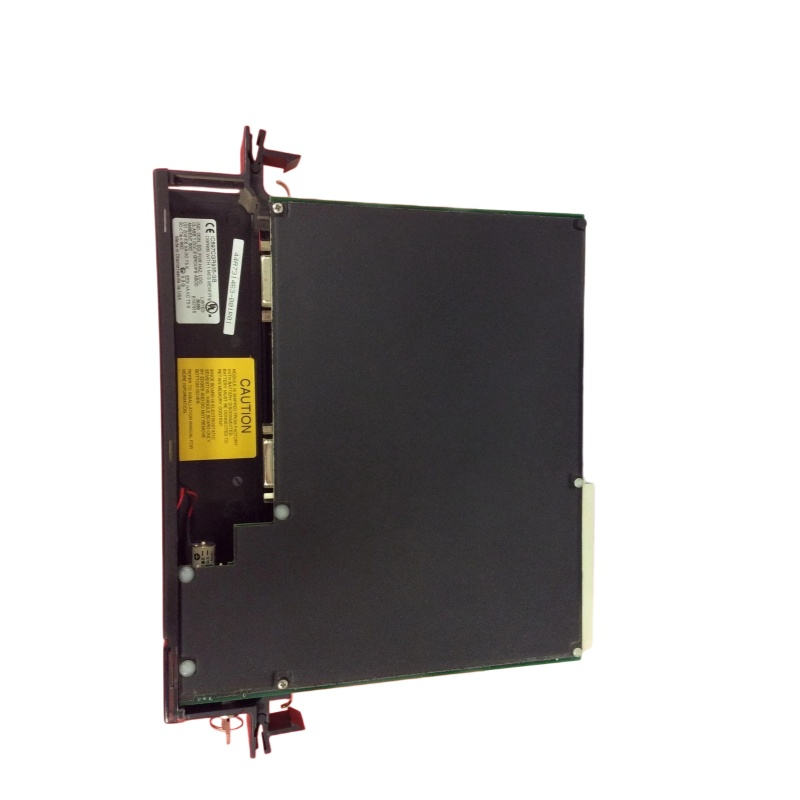
The GE Fanuc IC697CGR935-GB Hot Standby CPU Module is a reliable redundant controller for the Series 90-70 PLC platform.

First hand source, affordable price. Spot inventory!
•Shipping Port: Xiamen
•Manager: Rhonda
•E-mail: xrjtina@gmail.com
•Tel: + 86-15359273796(WhatsApp)
•Ship to you via Fedex/DHL/TNT/UPS/EMS
•Package: Original packing with cartons
GE Fanuc Automation IC697CGR935-GB is a Hot Standby CPU Controller Module from the GE Fanuc Series 90-70 PLC family. It is designed for CPU redundancy applications where high availability and continuous operation are required.
The IC697CGR935-GB is a single-slot redundant processor module that operates as part of a Hot Standby control system. Two identical CPU modules can be configured as a redundant pair, with one acting as the primary controller and the other as the backup controller. Both CPUs can synchronize application logic to provide fast recovery in case of controller failure.
It belongs to the GE Fanuc Series 90-70 PLC platform and is widely used in critical industrial applications requiring high system availability.
| Parameter | Specification |
|---|---|
| Manufacturer | GE Fanuc / General Electric |
| Model | IC697CGR935-GB |
| Series | Series 90-70 |
| Module Type | Hot Standby CPU / Redundant Controller |
| CPU Type | 32-bit floating point processor |
| Processor | Intel 80486DX4 |
| Clock Speed | 96 MHz |
| Memory | 1 MB battery-backed fast CMOS RAM |
| Installation | Single-slot PLC CPU module |
| Boolean Execution Speed | Approx. 0.4 μs per instruction |
| Discrete I/O Capacity | Up to 12K inputs + 12K outputs |
| Analog I/O Capacity | Up to 8K analog I/O |
| Communication | Serial communication ports |
| Redundancy Function | CPU redundancy / Hot Standby operation |
GE IC697CGR935-GB is commonly applied in:
The GE Fanuc IC697CGR935-GB Hot Standby CPU Module is a reliable redundant controller for the Series 90-70 PLC platform. With a 96 MHz 32-bit processor, 1 MB memory, and dedicated CPU redundancy capability, it is suitable for industrial systems where minimizing downtime and maximizing operational reliability are critical.